Buying a flat is one of the biggest financial commitments most people make in their lifetime. The location, price, floor plan, amenities, and connectivity are all important, but there is another factor that can make or break your home-buying experience: the reputation of the builder.
A beautifully designed project can still become a stressful investment if the developer has a history of delayed possession, poor construction quality, unresolved customer complaints, unclear documentation, or inadequate after-sales service.
On the other hand, choosing a reliable and transparent builder can make the entire process—from booking to possession—much smoother.
This guide explains how to check a builder’s reputation before buying a flat in India what documents to verify, where to research the developer, which red flags to watch for, and how to make an informed decision.
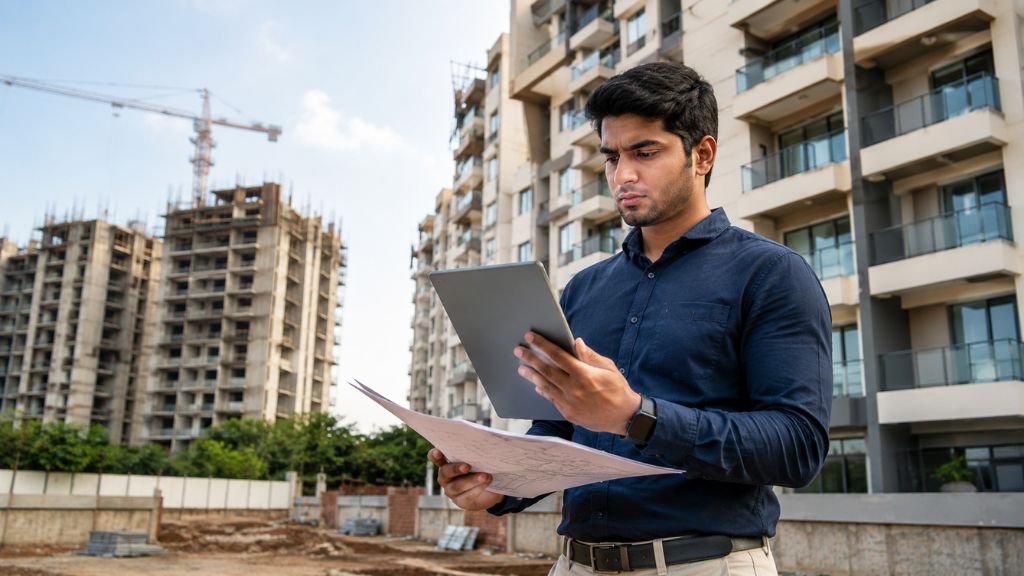
Why Builder Reputation Matters
When you buy a flat, you are not simply purchasing a physical structure. You are entering into a long-term relationship with the developer, project management team, maintenance team, and eventually the residential community.
A builder’s reputation can affect:
- Construction quality
- Project completion
- Possession timelines
- Legal compliance
- Documentation
- Customer service
- Resale value
- Property appreciation
- Maintenance standards
A low-priced apartment from an unreliable developer may ultimately cost more through delays, legal complications, repairs, or unexpected charges.
Therefore, builder research should happen before you pay the booking amount—not after.
1. Check the Builder’s Previous Projects
One of the easiest ways to evaluate a developer is to study their completed projects.
Don’t focus only on the project currently being advertised. Look at the builder’s track record over several years.
Check:
- Number of completed projects
- Project locations
- Completion timelines
- Construction quality
- Amenities delivered
- Maintenance condition
- Customer satisfaction
If possible, visit one or two completed projects personally.
Why Site Visits Matter
Marketing brochures can show the best version of a project. A completed site tells you what the builder actually delivered.
Look at:
- Building condition
- Common areas
- Lifts
- Parking
- Landscaping
- Security
- Water supply
- Maintenance
This can reveal more than an advertisement ever will.
2. Verify the Builder’s RERA Record
The Real Estate (Regulation and Development) Act, 2016 (RERA) has made it easier for homebuyers to access project information.
Before buying, search for the project on your state RERA authority’s website.
For a project in Uttar Pradesh, buyers should check the UP RERA records.
Verify:
- RERA registration number
- Promoter name
- Project details
- Land details
- Approved plans
- Construction status
- Proposed completion date
- Quarterly updates
- Complaints and orders, where available
Important Tip
Don’t just check whether the project is “RERA registered.”
Read the information available on the RERA portal.
The registration itself is not a guarantee of perfect execution; the project history and disclosed information also matter.
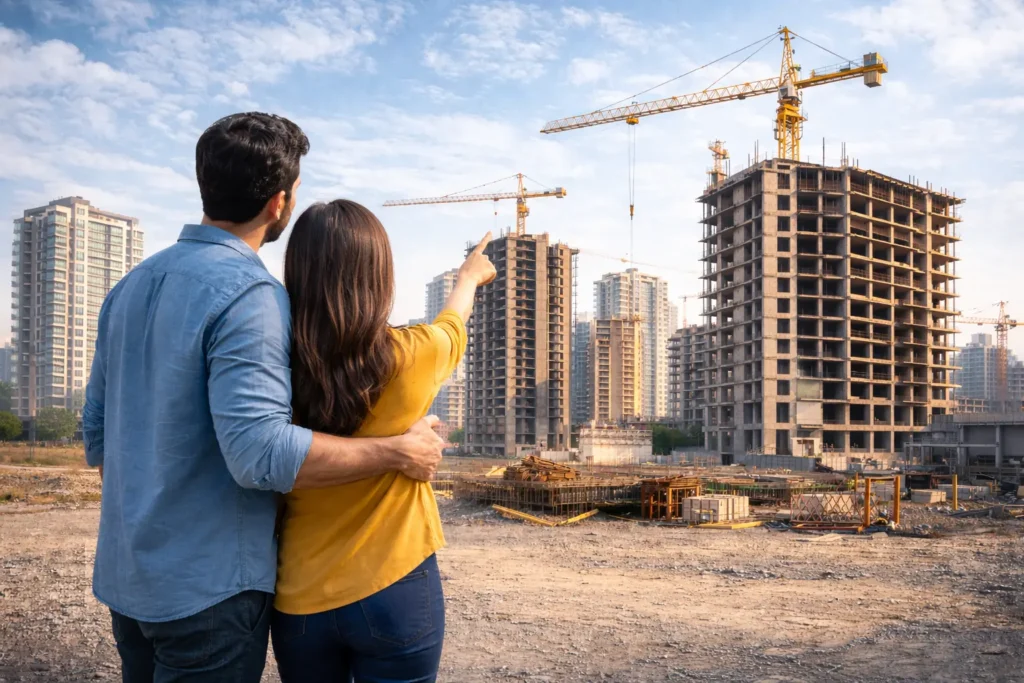
3. Search for Customer Complaints
A builder’s reputation is often easiest to understand by listening to previous customers.
Search online using combinations such as:
Builder Name + Reviews
Builder Name + Complaints
Builder Name + Delayed Possession
Project Name + Resident Reviews
Project Name + Maintenance Problems
Don’t rely on a single review.
Instead, look for patterns.
For Example
One negative review may be an individual dispute.
But if dozens of unrelated buyers report:
- Similar delays
- Poor construction
- Hidden charges
- Documentation issues
then it deserves serious attention.
4. Check Google Reviews Carefully
Google reviews can provide useful insights, especially for completed projects.
Look beyond the overall star rating.
Read:
- Recent reviews
- Old reviews
- Detailed reviews
- Developer responses
- Resident reviews
Red Flag
If many reviews mention the same unresolved problem over a long period, investigate further.
Green Flag
A builder that responds professionally to complaints and demonstrates how issues were resolved can indicate a better customer-service culture.
5. Talk to Existing Residents
This is one of the most effective ways to check a builder’s reputation.
Visit an existing project and speak with residents.
Ask simple questions:
- Was possession delivered on time?
- Were amenities delivered as promised?
- How is construction quality?
- Are there water or electricity issues?
- How is maintenance?
- Does the builder respond to complaints?
- Were there unexpected charges?
- Would you recommend this builder?
Residents have no reason to sell you the project, so their feedback can be extremely valuable.
6. Check Construction Quality
A builder’s reputation is ultimately reflected in the quality of its buildings.
During your site visit, inspect:
Inside the Flat
- Wall finishing
- Flooring
- Doors and windows
- Bathroom fittings
- Kitchen quality
- Electrical fittings
- Plumbing
- Ventilation
Common Areas
- Lifts
- Corridors
- Staircases
- Parking
- Fire safety equipment
- Landscaping
- Clubhouse
If possible, hire a qualified professional to inspect the property before finalizing the purchase.

7. Investigate Possession History
Delayed possession is one of the biggest concerns for homebuyers.
Find out whether the builder’s previous projects were delivered:
- On time
- Slightly delayed
- Significantly delayed
Ask for the original promised completion date and compare it with the actual possession date.
Why It Matters
Delays can result in:
- Additional rent
- Loan EMI burden
- Financial stress
- Investment opportunity loss
A builder with a consistent history of major delays should be approached cautiously.
8. Verify Land Title and Legal Approvals
A reputable builder should be transparent about project documentation.
Important documents may include:
- Title documents
- Encumbrance Certificate
- Development agreement
- Approved layout plan
- Building plan approval
- Commencement permissions
- Environmental approvals, where applicable
- Fire approvals, where applicable
- Completion/Occupancy Certificate, where applicable
Don’t simply accept verbal assurances.
Ask for documentary evidence and have important documents reviewed by a property lawyer.
9. Check Financial Transparency
A builder’s pricing should be clear.
Before booking, ask for a complete cost sheet covering:
- Basic property price
- Floor rise charges
- Parking
- Clubhouse charges
- Maintenance deposit
- Power backup
- Infrastructure charges
- Legal/documentation charges
- Registration-related costs
- Taxes applicable to the transaction
Red Flag
Be cautious if the salesperson gives a very attractive base price but cannot provide a complete written cost breakdown.
10. Evaluate After-Sales Service
A builder’s responsibility doesn’t necessarily end when you receive possession.
After-sales service can include:
- Defect resolution
- Maintenance support
- Documentation assistance
- Handover process
- Common-area maintenance
- Warranty support
Ask existing residents how quickly the developer responds to complaints.
A builder who is responsive after possession demonstrates stronger customer commitment.
11. Check Builder’s Financial and Corporate Background
For larger developers, additional research can be useful.
Check publicly available information about:
- Company registration
- Directors
- Previous businesses
- Litigation
- Financial disclosures where available
- Partnerships
- Project history
If a company has repeatedly changed names, abandoned projects, or been involved in significant disputes, investigate carefully before investing.
12. Look at the Builder’s Local Reputation
A builder may have a strong reputation in one city but limited experience in another.
For example, if you’re buying a property in Greater Noida West, research the developer’s actual performance in the NCR market.
Look at:
- Completed NCR projects
- Local customer feedback
- Local project approvals
- Delivery record
- Local maintenance performance
Local experience can be particularly valuable because property regulations and market conditions vary by state.
13. Don’t Judge a Builder Only by Social Media
A strong Instagram page doesn’t automatically mean a strong developer.
Builders may showcase:
- Luxury interiors
- Drone videos
- Happy families
- Construction progress
- Lifestyle amenities
These are useful for understanding marketing, but they don’t prove legal compliance or construction quality.
Use Social Media For:
- Project updates
- Construction progress
- Company communication
Use Official Records For:
- RERA information
- Approvals
- Legal status
- Project disclosures
14. Compare the Builder With Competitors
Don’t evaluate one developer in isolation.
Create a comparison table.
| Factor | Builder A | Builder B | Builder C |
|---|---|---|---|
| Completed Projects | ✓ | ✓ | ✓ |
| Delivery Track Record | Good | Average | Good |
| RERA Record | ✓ | ✓ | ✓ |
| Customer Reviews | Good | Mixed | Good |
| Construction Quality | Good | Average | Good |
| After-Sales Support | Good | Mixed | Good |
This makes your decision more objective.
15. Watch for These Red Flags
Be cautious if you notice:
Unrealistic Promises
“Guaranteed 30% appreciation” or “100% return in two years” should immediately raise questions.
Pressure to Book Immediately
Statements like:
“Pay today or the price will double tomorrow.”
should not replace proper due diligence.
Incomplete Documentation
If important documents are repeatedly unavailable, investigate before proceeding.
Excessive Negative Reviews
Look for recurring complaints rather than isolated criticism.
Unclear Pricing
Always request a written cost sheet.
Frequent Project Delays
Repeated delays across multiple projects are a major warning sign.
Aggressive Sales Tactics
A good property should not require you to ignore your due diligence.
16. Visit the Builder’s Completed Project
This deserves special emphasis.
Before buying, visit at least one completed project by the same developer.
Ideally, visit without the salesperson if possible.
Observe:
- Building maintenance
- Quality of common areas
- Resident satisfaction
- Security
- Parking
- Water availability
- Lift condition
- Landscaping
- Clubhouse condition
A completed project provides the best evidence of what the developer is capable of delivering.
17. Hire a Property Lawyer
Even after researching the builder yourself, professional legal advice can be valuable.
A property lawyer can help verify:
- Ownership
- Agreements
- Sale deed
- Encumbrances
- Approvals
- Clauses
- Payment obligations
- Buyer rights
Legal fees are small compared with the financial risk of buying a property with unresolved legal issues.
18. Check the Sale Agreement Carefully
Never sign documents without reading them.
Pay particular attention to:
- Possession date
- Payment schedule
- Cancellation terms
- Delay compensation
- Maintenance obligations
- Parking rights
- Carpet area
- UDS (Undivided Share of Land)
- Additional charges
- Defect liability provisions
If any clause is unclear, ask the builder or your lawyer for clarification.
19. Evaluate Builder Transparency
Transparency is one of the strongest indicators of a reliable developer.
A transparent builder should be willing to clearly explain:
- Project approvals
- Pricing
- Construction status
- Possession timeline
- Specifications
- Payment schedule
- Registration process
- Maintenance arrangements
If the answers keep changing, consider it a warning sign.
20. Create a Builder Reputation Checklist
Before booking a flat, score the builder from 1 to 5.
| Factor | Score |
| Completed Projects | /5 |
| Construction Quality | /5 |
| Possession Record | /5 |
| RERA Transparency | /5 |
| Customer Reviews | /5 |
| Legal Documentation | /5 |
| Pricing Transparency | /5 |
| After-Sales Service | /5 |
| Local Reputation | /5 |
| Overall Trust | /5 |
This simple exercise can help you make a more rational decision instead of choosing based only on price or attractive marketing.
How AMBR Homes Builds Buyer Trust
At AMBR Homes we understand that purchasing a home is a long-term commitment. That’s why trust, transparency, and customer satisfaction are important parts of our approach.
Our focus is on providing thoughtfully designed residential homes in Greater Noida West, with an emphasis on quality, modern amenities, connectivity, and a comfortable lifestyle.
For prospective buyers, understanding the project before making a decision is important. Buyers should review project information, documentation, specifications, pricing, and applicable approvals and make decisions after conducting appropriate due diligence.
AMBR Homes supports customers throughout their property-buying journey, from site visits and property selection to documentation and registration guidance, helping make the process clearer and more comfortable.
Frequently Asked Questions
How can I check whether a builder is trustworthy?
Research the builder’s completed projects, RERA records, customer reviews, possession history, legal documents, construction quality, and after-sales service.
Is RERA registration enough to trust a builder?
No. RERA registration is an important verification step, but buyers should also examine the project’s disclosures, construction progress, complaints, approvals, and the developer’s track record.
Should I visit the builder’s previous projects?
Absolutely. Visiting completed projects and speaking with residents can provide valuable information about construction quality and after-sales service.
How important are Google reviews?
They can be useful as one source of feedback, but don’t rely on them alone. Look for patterns across multiple sources.
Should I hire a property lawyer?
For a significant property purchase, professional legal review is highly advisable, especially before signing the sale agreement or making substantial payments.
Final Checklist Before Buying a Flat
Before paying your booking amount, ask yourself:
Builder
☐ Have I researched the builder’s previous projects?
RERA
☐ Have I checked the project’s RERA information?
Legal
☐ Have I verified the important property documents?
Quality
☐ Have I inspected the construction quality?
Reviews
☐ Have I spoken with existing residents?
Possession
☐ Have I checked the builder’s previous delivery record?
Pricing
☐ Do I have a complete written cost sheet?
Agreement
☐ Has a lawyer reviewed the important clauses?
After-Sales
☐ Have I checked how the builder handles customer complaints?
If the answers to these questions are satisfactory, you can move forward with greater confidence.
Conclusion
Choosing a builder is just as important as choosing the property itself. A good location and attractive apartment may look impressive, but the developer’s track record determines how confidently you can expect the promised quality, possession, documentation, and after-sales support.
Before buying a flat, take time to research completed projects, check RERA records, read customer reviews, speak with residents, verify legal documents, compare pricing, inspect construction quality, and understand the sale agreement.