Buying a flat is a major financial commitment, and the decision should not be based only on the location, apartment size, price, amenities, or possession timeline. Before paying a substantial booking amount or signing the final agreement, homebuyers should carefully verify the property’s legal, ownership, approval, financial, and project-related documents.
Noida Extension, widely known as Greater Noida West, has developed into a major residential market with a wide range of apartments and housing projects. With many options available, buyers need to compare not only prices and specifications but also the documentation associated with the property.
A properly documented property can make the purchase process more transparent and reduce the risk of unexpected legal or financial issues later.
In this guide, AMBR Homes explains the important documents that buyers should check before purchasing a flat in Noida Extension, along with practical questions to ask the developer or seller.
Why Property Document Verification Is Important
When buying a flat, you are not simply purchasing four walls and a floor plan. You are entering into a legal transaction involving land, development rights, construction approvals, ownership, payments, and future transfer of the property.
A buyer should therefore verify:
- Who legally owns the property
- Whether the project has the required approvals
- Whether the developer has the right to develop the land
- Whether the project is registered with the relevant authority, where applicable
- Whether the flat has any outstanding financial liability
- Whether the agreement accurately describes the property
- Whether promised facilities and specifications are properly documented
- Whether there are restrictions or disputes affecting the property
Document verification is particularly important for first-time homebuyers because many legal and technical documents may not be easy to understand without professional assistance.
1. RERA Registration Details
One of the first things buyers should check for an applicable project is its registration under the Real Estate (Regulation and Development) framework.
RERA was introduced to improve transparency and protect the interests of homebuyers.
For an applicable registered project, buyers should verify details such as:
- Project name
- Promoter/developer name
- Project registration number
- Registration validity/status
- Project location
- Number of buildings/towers
- Proposed completion information
- Approved project details
- Promoter information
Don’t rely only on a salesperson’s statement that a project is “RERA approved.”
Check the relevant registration details independently and make sure they correspond to the actual project you are planning to purchase.
2. Title and Ownership Documents
The title of the land is one of the most important aspects of property verification.
A buyer should understand who owns the land on which the project is being developed and whether the developer has legally valid rights to develop the project.
Depending on the project structure, documents may include:
- Title documents
- Sale deeds
- Lease deeds
- Development agreements
- Joint development agreements
- Allotment documents
- Authority-related land documents
The exact documentation can vary depending on whether the land is freehold, leasehold, authority-allotted or developed under another legal arrangement.
A property lawyer can help examine the title chain and identify potential issues.
3. Encumbrance and Liability Details
An encumbrance generally refers to a legal or financial claim affecting a property.
Before buying, buyers should determine whether the property or relevant project land is subject to:
- Mortgage
- Loan
- Charge
- Litigation
- Attachment
- Other financial or legal claims
For example, if a property has an existing financial charge, the buyer should understand how and when that charge will be released.
Do not assume that a property is free from liabilities simply because it is being offered for sale.
Ask for appropriate documentation and professional verification.
4. Approved Building Plan
The approved building plan is another important document.
It provides information about what has been approved for construction by the relevant authority.
Buyers should check whether the actual project corresponds with the approved plan.
Important aspects can include:
- Number of towers/buildings
- Number of floors
- Apartment layouts
- Common areas
- Parking arrangements
- Access roads
- Open spaces
- Amenities
- Other approved development components
This is important because marketing material and approved plans are not necessarily the same thing.
A brochure may show a proposed development, while the approved documents provide the formal basis for what has been sanctioned.
5. Building Permission and Construction Approvals
A residential project may require several permissions and approvals during its development.
Depending on the project and stage, relevant documents may include approvals relating to:
- Building plans
- Construction
- Fire safety
- Environmental requirements
- Water and sewerage
- Electricity
- Access and infrastructure
The exact approvals required depend on the project and applicable regulations.
Buyers should ask the developer for the relevant approval details and verify them where possible.
6. Commencement Certificate
A commencement certificate, where applicable, is an important document relating to permission to commence construction.
It helps establish whether construction has been authorised according to the relevant approvals.
Before buying an under-construction property, buyers should understand:
- Whether construction permission has been obtained
- Which buildings/towers it covers
- Whether the current construction stage corresponds with the approved permissions
This is another area where professional legal or technical verification can be useful.
7. Completion Certificate
For completed projects, buyers should understand whether the required completion certificate has been obtained.
A completion certificate generally indicates that the development has been completed according to the sanctioned plans and applicable requirements, subject to the relevant authority’s process.
Buyers should not confuse completion status with possession advertisements.
Ask:
Has the required completion certification been issued for the relevant project/building?
8. Occupancy Certificate
The Occupancy Certificate (OC) is particularly important for ready-to-move properties.
An OC generally relates to the building’s suitability for occupation after completion, subject to applicable regulations and authority processes.
If you are buying a ready-to-move flat, ask whether the applicable occupancy certificate has been issued.
This is particularly important when a property is being advertised as “ready to move.”
Don’t rely solely on a sales representative’s verbal confirmation.
9. Sale Agreement / Agreement for Sale
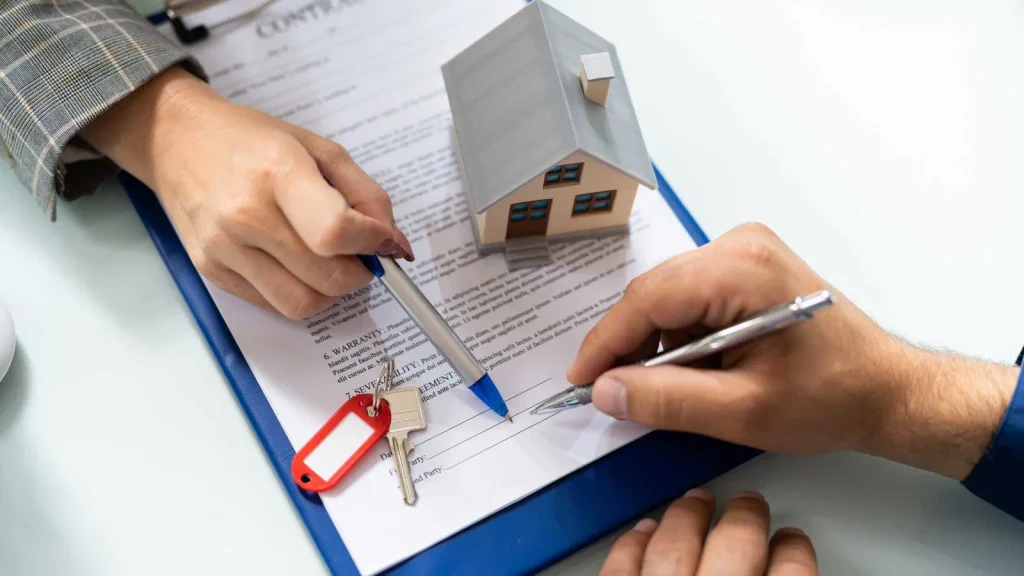
The Agreement for Sale is one of the most important documents a homebuyer will sign.
Read it carefully before signing.
It should clearly explain important terms such as:
- Apartment number
- Tower/block
- Floor
- Carpet area
- Total consideration
- Payment schedule
- Possession terms
- Maintenance
- Parking
- Default provisions
- Cancellation terms
- Transfer provisions
- Other applicable charges
Never sign an agreement simply because the salesperson says that it is a standard document.
Read the document carefully and seek legal advice if you do not understand any clause.
10. Allotment Letter
The allotment letter generally records the allocation of a particular property to the buyer.
Check whether it correctly mentions:
- Buyer’s name
- Project
- Tower
- Flat number
- Area
- Price
- Payment details
- Applicable terms
Compare the information in the allotment letter with the booking form, cost sheet and Agreement for Sale.
Any mismatch should be clarified before proceeding.
11. Cost Sheet
A detailed cost sheet is essential for understanding the actual financial commitment.
Don’t rely only on a headline property price.
The cost sheet should clearly explain applicable components such as:
- Basic property price
- GST, where applicable
- Parking
- Floor-rise charges
- Preferential location charges
- Maintenance
- Club/facility charges
- Electricity/water-related charges
- Other applicable costs
- Registration and stamp duty
Ask the developer to explain every unfamiliar charge.
A clear cost sheet can help you compare two properties more accurately.
12. Payment Receipts
Keep records of every payment made during the property transaction.
These can include:
- Booking payment
- Instalments
- Down payment
- GST payments
- Other charges
- Maintenance payments
Make sure payments are made through traceable and documented channels.
Keep copies of:
- Receipts
- Bank statements
- Payment acknowledgements
- Demand letters
These documents can become important during possession, registration or future resale.
13. No-Dues Certificate
For a resale property, buyers should pay particular attention to outstanding dues.
A No-Dues Certificate or equivalent confirmation can help establish whether there are outstanding amounts related to:
- Maintenance
- Electricity
- Water
- Property-related charges
- Society dues
- Other applicable payments
If you are buying a resale flat, clarify who is responsible for any outstanding amount before completing the transaction.
14. Property Tax Records
Property tax documentation can help establish whether applicable property-related taxes have been paid.
For resale properties, ask for relevant records and verify whether there are outstanding dues.
For a new project, the applicable tax situation may depend on the stage and nature of the property.
The exact process can vary, so buyers should confirm the applicable requirements for their specific transaction.
15. Mutation and Transfer Records
For certain property transactions, mutation or relevant transfer records may be important.
These records can help establish the transfer of the property interest in the relevant authority’s records.
For a resale property, buyers should understand whether the seller’s ownership and records are properly updated.
Don’t assume that a sale agreement alone proves every aspect of the seller’s title.
16. Power of Attorney
If someone is selling or signing documents on behalf of the property owner, carefully check the Power of Attorney (POA).
Verify:
- Who granted the authority
- Who received the authority
- Whether it is valid
- What powers are granted
- Whether those powers cover the proposed transaction
A property lawyer should review the POA in cases where the transaction is being conducted through an authorised representative.
17. Seller’s Identity and Ownership Proof
For resale transactions, verify the seller’s identity and compare it with the ownership documents.
Check:
- Name
- Identity documents
- Ownership documents
- Property details
If there are multiple owners, all relevant ownership interests should be properly addressed.
If the property belongs to a company, trust, partnership or other legal entity, additional documentation may be required.
18. Bank Loan and Mortgage Documents
If you are purchasing a property that has an existing loan, ask for details of the outstanding loan and the process for releasing the lender’s charge.
For a resale flat, this can be particularly important.
The buyer should understand:
- Outstanding loan amount
- Lender’s rights
- Release/NOC process
- Payment structure
- Registration requirements
Don’t transfer the full purchase amount without understanding how an existing mortgage will be cleared.
19. Possession Letter
For a completed apartment, the possession letter is another important document.
It generally records the handover of the apartment to the buyer.
Check whether the possession documentation matches:
- Flat number
- Tower
- Area
- Project
- Applicable charges
- Possession date
Keep the possession documentation safely after receiving the property.
20. Specifications and Amenities
Many buyers choose a project based on its advertised specifications and amenities.
However, buyers should distinguish between:
Marketing promises and contractual/project documentation.
If a particular specification or facility is important to you, ask where it is documented.
This could include:
- Flooring
- Doors and windows
- Kitchen specifications
- Electrical fittings
- Security systems
- Gym
- Clubhouse
- Parking
- Landscaping
- Other common facilities
The more important the feature is to your purchase decision, the more useful it is to have clear documentation.
Documents for a New Flat vs Resale Flat
The documents you need to verify can differ depending on whether you are purchasing a new property or a resale property.
New Flat
For a new property, focus on:
- RERA registration
- Land/title documents
- Approved plans
- Development permissions
- Building approvals
- Agreement for Sale
- Allotment letter
- Cost sheet
- Payment schedule
- Completion/occupancy documents where applicable
Resale Flat
For a resale property, also pay close attention to:
- Previous sale deed
- Seller’s ownership
- Previous payment records
- Maintenance dues
- Property tax
- Existing loan
- Encumbrances
- Possession documents
- Society/association records
- No-dues confirmation
Documents to Verify Before Paying the Booking Amount
Ideally, document verification should begin before making a significant financial commitment.
At minimum, ask for clarity on:
- Project registration details
- Developer identity
- Land/title information
- Apartment details
- Cost sheet
- Agreement terms
- Applicable approvals
- Possession status
- Additional charges
You don’t necessarily need every document physically in your hands before an initial enquiry, but before committing substantial money, you should have enough verified information to understand what you are purchasing.
Common Documentation Mistakes Homebuyers Make
Mistake 1: Trusting Verbal Assurances
If something is important, ask for it in writing.
Mistake 2: Not Reading the Agreement
The agreement can contain important financial and legal conditions.
Mistake 3: Comparing Only Property Prices
Two properties with similar prices can have very different additional costs.
Mistake 4: Ignoring Resale Liabilities
Always check maintenance, tax and loan-related dues.
Mistake 5: Not Checking the Actual Flat Details
Verify tower, floor, flat number, area and specifications.
Mistake 6: Signing Under Pressure
Take sufficient time to understand important documents before signing.
Mistake 7: Not Taking Professional Advice
If you do not understand title documents, agreements or legal clauses, consider consulting an independent property lawyer.
How AMBR Homes Can Help Homebuyers
For buyers exploring residential properties in Noida Extension / Greater Noida West, AMBR Homes focuses on residential housing options for families and homebuyers.
Buying a home should involve more than simply selecting a preferred floor plan.
At AMBR Homes, prospective buyers can discuss property details, apartment specifications, pricing and the purchase process before making their decision.
Buyers should always ask questions about:
- Property specifications
- Carpet area
- Total cost
- Applicable charges
- Possession
- Documentation
- Maintenance
- Amenities
- Registration process
A transparent discussion before booking can help buyers understand the overall purchase better.
Final Property Document Checklist
Before purchasing a flat in Noida Extension, use this checklist:
☑ RERA registration details, where applicable
☑ Land/title documents
☑ Development rights/documents
☑ Encumbrance/liability information
☑ Approved building plan
☑ Construction approvals
☑ Commencement-related approvals, where applicable
☑ Completion certificate, where applicable
☑ Occupancy Certificate for applicable completed properties
☑ Agreement for Sale
☑ Allotment letter
☑ Detailed cost sheet
☑ Payment schedule
☑ Payment receipts
☑ Property tax records, where applicable
☑ No-dues confirmation
☑ Seller ownership documents for resale
☑ Existing loan/mortgage details
☑ Possession letter
☑ Specifications and amenity details
Frequently Asked Questions
What documents should I check before buying a flat in Noida Extension?
Important documents can include RERA registration details, title/ownership documents, approved plans, applicable construction approvals, Agreement for Sale, allotment letter, cost sheet, payment records and completion/occupancy documents where applicable.
Is RERA registration enough to verify a property?
No. RERA registration is important, but buyers should also examine title, approvals, agreements, financial obligations and other relevant documents.
Should I hire a property lawyer?
For a significant property purchase, an independent property lawyer can be useful for reviewing title documents, agreements, ownership records and legal risks.
What should I check in a resale flat?
For a resale flat, pay particular attention to the seller’s ownership, previous sale documents, existing loan, maintenance dues, property tax, no-dues status, possession documents and any outstanding legal or financial liabilities.
Should I verify documents before paying the booking amount?
Yes. Buyers should obtain sufficient information and verify important project and transaction details before making a substantial financial commitment.
Conclusion
Buying a flat in Noida Extension is a significant financial decision, and proper document verification should be an essential part of the home-buying process.
From RERA registration and title documents to approved plans, Agreement for Sale, cost sheets, payment records and occupancy-related documents, each document serves a different purpose.
The goal is not simply to collect paperwork. The goal is to understand what you are buying, who has the legal right to sell or develop it, what approvals exist, what you will pay, and what rights and obligations are included in your agreement.
Whether you are considering a 2BHK or 3BHK apartment, take time to verify the documents before making a major financial commitment.
AMBR Homes focuses on residential properties in Greater Noida West and encourages homebuyers to understand property details, costs and documentation before moving forward.