The real estate industry is filled with technical terms that can be confusing for first-time homebuyers and investors. One such term is TDR (Transferable Development Rights). While it is commonly used by builders, developers, urban planners, and government authorities, many buyers are unaware of its importance and how it influences property development.
As Indian cities continue to grow rapidly, urban planning has become increasingly important. Governments need to build roads, parks, schools, metro corridors, and other public infrastructure without placing excessive financial pressure on public funds. One of the most effective planning tools used for this purpose is Transferable Development Rights (TDR).
In this detailed guide, you’ll learn what TDR is, how it works, its types, advantages, limitations, legal aspects, and why it matters for both developers and homebuyers. You’ll also discover how AMBR Homes focuses on transparency and planned development to deliver quality residential projects.
What Is TDR in Real Estate?
TDR (Transferable Development Rights) is a planning mechanism that allows a landowner to transfer the unused development potential of one property to another designated property.
In simple words:
If the government acquires or reserves a portion of your land for public purposes such as roads, parks, or infrastructure, instead of paying full cash compensation, it may grant you Development Rights Certificates (DRCs). These rights can then be sold or transferred to another developer, who can use them to construct additional floor area on another eligible property.
This system benefits both landowners and city planners by promoting organized urban development.
Understanding TDR with a Simple Example
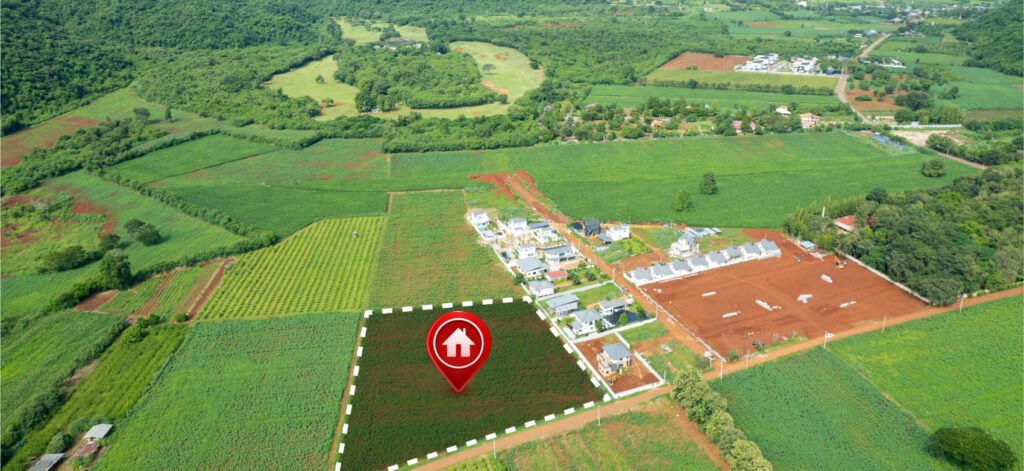
Imagine you own a 2,000 sq. meter plot.
The local authority reserves 600 sq. meters for road widening.
Instead of paying cash compensation, the authority grants you development rights equal to the lost development potential.
You may:
- Use these rights on another eligible property.
- Sell the rights to another builder.
- Transfer them according to local regulations.
This is called Transferable Development Rights (TDR).
Why Was TDR Introduced?
Rapid urbanization creates increasing demand for:
- Wider roads
- Metro projects
- Public parks
- Schools
- Hospitals
- Green belts
- Water infrastructure
Acquiring land through direct compensation is often expensive and time-consuming.
TDR offers an alternative solution by compensating landowners through development rights instead of immediate monetary payment.
How Does TDR Work?
The process generally involves the following steps:
Step 1: Government Acquisition
A government authority reserves private land for public development.
Step 2: Issue of Development Rights
The owner receives Development Rights Certificates based on applicable regulations.
Step 3: Transfer
The owner may sell or transfer these rights to another developer.
Step 4: Utilization
The developer uses these rights to increase permissible construction on another approved property.
What Is FSI and How Is It Related to TDR?
To understand TDR, you must first understand FSI (Floor Space Index) or FAR (Floor Area Ratio).
FSI determines how much construction is permitted on a plot.
For example:
- Plot Size = 1,000 sq. meters
- FSI = 2.0
Maximum construction allowed:
1,000 × 2 = 2,000 sq. meters
When developers purchase TDR, they may receive permission to construct additional floor area beyond the standard permissible limit, subject to local regulations.
Types of TDR
Different cities classify TDR differently, but the most common categories include:
1. Road Widening TDR
Issued when private land is acquired for:
- Road expansion
- Flyovers
- Highways
2. Public Amenities TDR
Granted for land reserved for:
- Schools
- Hospitals
- Parks
- Community centers
3. Heritage TDR
Owners of heritage properties often face construction restrictions.
TDR compensates them by allowing development rights to be transferred elsewhere.
4. Slum Rehabilitation TDR
Builders involved in redevelopment projects may receive TDR as an incentive for constructing rehabilitation housing.
5. Green Zone TDR
Land preserved for environmental protection or ecological conservation may also qualify for transferable development rights.
Benefits of TDR
1. Planned Urban Development
TDR enables governments to create better infrastructure without excessive acquisition costs.
Cities become more organized and sustainable.
2. Fair Compensation
Landowners receive valuable development rights rather than waiting for lengthy compensation procedures.
3. Faster Infrastructure Projects
Roads, metro corridors, and public utilities can be developed more efficiently.
4. Supports Real Estate Growth
Developers can maximize land utilization in designated growth zones.
5. Encourages Redevelopment
TDR promotes the redevelopment of aging neighborhoods and underutilized areas.
6. Reduces Government Financial Burden
Instead of large cash payouts, authorities compensate landowners through transferable rights.
7. Higher Property Utilization
Developers can construct additional residential or commercial space where infrastructure supports higher density.
Advantages for Developers
Builders benefit from TDR in several ways:
- Increased construction potential
- Better project profitability
- Efficient land utilization
- Faster approvals in some cases
- Opportunity to develop premium projects
Benefits for Homebuyers
Although buyers don’t directly purchase TDR, they benefit indirectly through:
Better Infrastructure
Improved roads, transport, and public amenities increase convenience.
Planned Communities
Cities developed using modern planning principles offer a better quality of life.
Higher Property Appreciation
Infrastructure improvements often lead to increased property values over time.
Sustainable Development
Balanced urban growth creates healthier and more livable neighborhoods.
Challenges of TDR
Despite its advantages, TDR also has certain limitations.
Regulatory Complexity
TDR rules differ across states and local authorities, making compliance complex.
Market Fluctuations
The value of TDR certificates depends on demand and supply.
Limited Utilization Areas
Development rights can only be used in zones permitted by planning authorities.
Administrative Delays
Approval and transfer processes may sometimes take longer than expected.
TDR in India
Many Indian cities have adopted TDR policies to support urban development.
Examples include:
- Mumbai
- Pune
- Hyderabad
- Bengaluru
- Ahmedabad
- Delhi NCR (select planning frameworks)
Each city follows its own Development Control Regulations (DCR), so buyers and developers should always verify the applicable local rules.
Difference Between TDR and FSI
| Feature | TDR | FSI |
|---|---|---|
| Meaning | Transferable Development Rights | Floor Space Index |
| Purpose | Transfer unused development rights | Determines permissible construction area |
| Transferable | Yes | No |
| Issued By | Government authority | Planning authority |
| Use | Increase buildable area on eligible land | Base construction limit |
Why TDR Matters in Growing Cities Like Greater Noida
As cities such as Greater Noida continue to expand with new roads, metro connectivity, industrial hubs, and residential townships, efficient land-use planning becomes increasingly important.
Planning tools like TDR help create:
- Better road networks
- Public parks
- Community infrastructure
- Educational facilities
- Healthcare access
- Sustainable urban growth
These developments benefit homeowners by enhancing connectivity, convenience, and long-term property value.
AMBR Homes: Building Trust Through Planned Development
At AMBR Homes, we believe that successful real estate development goes beyond constructing buildings—it involves creating well-planned communities that offer lasting value.
Our commitment includes:
Prime Locations
Projects are strategically located in rapidly developing areas of Greater Noida with excellent connectivity.
Transparent Documentation
We ensure buyers receive clear information regarding approvals, pricing, and project details.
Quality Construction
Every home is built using premium materials and modern construction techniques.
Smart & Sustainable Living
Our developments feature:
- Energy-efficient planning
- Landscaped green areas
- Spacious layouts
- Natural ventilation
- Modern amenities
- Secure communities
Customer-Centric Approach
From site visits to possession, AMBR Homes is dedicated to delivering a seamless and trustworthy home-buying experience.
Tips for Homebuyers
If you’re purchasing a property in a developing area, consider the following:
- Verify project approvals and legal documents.
- Check the builder’s reputation and delivery record.
- Understand local infrastructure plans.
- Ask about zoning and future developments.
- Invest with a long-term perspective.
- Choose trusted developers like AMBR Homes for transparency and quality.
Future of TDR in India
As urbanization accelerates, TDR is expected to play an even greater role in balancing development with public infrastructure needs.
Future trends include:
- Smart city expansion
- Transit-oriented development
- Sustainable land-use planning
- Digital approval systems
- Integrated township development
- Improved transparency in development rights management
These initiatives will help create more organized, efficient, and livable cities across India.
Conclusion
Transferable Development Rights (TDR) is one of the most important tools in modern urban planning. It enables governments to develop essential infrastructure while fairly compensating landowners through transferable construction rights.
For developers, TDR provides opportunities to maximize land utilization and support planned city growth. For homebuyers, it contributes to improved infrastructure, better connectivity, and stronger long-term property appreciation.